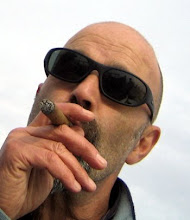
Yesterday morning was all fear and hysteria (on my part) at the prospect of giving our talks later in the day. Coals to Newcastle? Hubris finally punished in Erdenet?
We had lunch at our local Chinese, and then played snooker for a while to vent our manic energy.
We arrive at the Cultural Centre with plenty of time to spare, and set up. The hall is not a giant one as I had feared, but still sizeable. People arrive in dribs and drabs. At last around 40 people have turned up (not the hordes that invaded my dreams) , and we begin. It goes very well. We each talk for a quarter of an hour about our experience of Buddhism in the West; I lead a 20 minute meditation, and we have questions and answers. The audience are charming. Oiuna has borne the brunt of the evening, having to translate us as we go along, not something she has attempted before so publicly. She is excellent, and we are very grateful to her. We leave the building after fond farewells to our audience, and look up to take a last look at the huge poster of ourselves ( which secretly we would like to take back with us to London) - it has already been removed! The bubble of celebrity has burst.
We spend the evening watching Tom and Jerry, to unwind.
This morning we were given a tour of the copper mine, by a charming young man called Nassa, who had studied in the States and spoke passable English. Its a stupendous business extracting copper, and here everything is on a vast and superlative scale. I have seen nothing like it before, and find it very moving. Nassa is disarmingly frank about the health hazards of working here, and it seems as if health issues have not been uppermost in managers' minds until recently. We are invited to lunch at the office workers' canteen. Noticeably, there are Caucasian faces in abundance, as many Russians work here. We have become so used already to being surrounded by Mongol physiognomies. Copper is widely used in electronics, and you probably would not be able to read me now , with such ease, if not for gigantic and life-threatening operations like these at Erdenet.
We return to our flat dazed by the experience, and flattened by the copious lunch, and sleep awhile. Too soon, a taxi comes and whisks us to the outskirts of town, to the University. We are to address a class of Business students. ( Business, because they are the ones, we are told, who request outside speakers). Its a giant class of 150 youngsters, and again it goes very well. We talk very much off the cuff, and I lead another meditation, which for them is a very novel experience. Although they think of themselves as Buddhist they have no real experience of meditation, which to us seems very strange. I glance out of the window. Beyond the road that skirts the building is a great, featureless, brown hill. I imagine it in a few years' time, covered in streets and buildings as Erdenet advances inexorably into the landscape. It is already Mongolia's second city after UB. The University throbs with youth and energy.
Hardly recovered from lunch, we are invited to dinner by our two host monks, who have arranged our program here. We can hardly refuse. We are soon in a private room of a restaurant, lined in gold wallpaper, politely trying to consume our meal. The younger monk is the head of the monastery, perhaps thirty. He is the archetypal doer, and fundraiser. He has the build of a rugby player, and wears resplendent and rather flashy robes, and is constantly attending to his mobile phone, between mouthfuls. The older, and altogether gentler soul, has gently frayed cuffs, and a lovely quiet manner, with a hesitant smattering of English.
Later, and alone, we flop down to Tom and Jerry.
Tomorrow is our last day here, and then we go on safari to the wilds, in a jeep manned by Ouina's brother and brother-in-law. We will be mostly off metalled roads, and will visit the ancient Mongol capital at Karkoram and various Buddhist temples. I may be out of cyberspace for at least a week, until we return to UB.
A huge thank you to Ouina for her hospitality. Its been a huge privilege, and pleasure, staying here.
A plea for emails : I would love to know how you all are . I am aware there is an economic crisis and you are busy counting your shekels, but I want to know how things are at Goldsmiths and Edinburgh. What's up in Bow and Bethnal Green? What's happening in Devon and Kirkby Lonsdale? How are things in Primrose Hill and High Hurstwood? Blaendol House? Tayport, Fife? If you are shy to write to the blog, try me at mahananda@tiscali.co.uk
Happy birthday to you today, Rosalind. I think about you, and would be pleased to have news.
Bon voyage Kieran! See you next in Morocco perhaps!
Thanks 'Ronny' for your message, but who are you? Roman from Irkutsk? If so best wishes from us all!
Monday, 20 October 2008

Saturday, 18 October 2008
travelling trio hit the small screen in Erdenet
Last night we were whisked into a television studio, with a friendly local lama and our hostess/interpreter Oiuna, and interviewed LIVE on a local TV channel. This was an hors d'oeuvre to our public appearance tomorrow night at the local Palace of Culture where, before a possible audience of hundreds, we will give our thoughts on Western Buddhism. On the front of the building hangs a poster, half a mile high, with our faces on it!
But backtracking a day or two to our last afternoon in Ulan Ude.........
I spent it alone, first visiting a local Photography Museum, all abustle with a party of primary school children, full of early images of the city which grew up from the C16 on the banks of the Selenga, a mighty river which flows down from deep in Mongolia into Lake Baikal. It was a trading post on the Tea Caravan route from China to Irkutsk. Outside, an accordeon plays in the street, and I am transported into an aural/visual ecstasy. I drop my last roubles into the accordeonist's hat - 'mon semblable, mon frere'. (For those of you who do not know me too well, I play the accordeon, indifferently perhaps, but certainly with great enthusiasm). Back out on the streets I soak up the glorious late-afternoon light, and snap away with my digital camera which I am at last making friends with, after years of older technologies which I have relinquished reluctantly. I make a friend of handsome young Sergei, who, too, is snapping away , he as part of his job for an advertising agency, me as indolent tourist. He is curious about me, and engages me in conversation, in pleasantly fluent English. He turns out to be a Jehovah's witness! Siberia is full of surprises.
The next morning long before dawn we are back on the train, and chug away into Mongolia after an 8 hour wait at the border, where nothing much happens. We have masses of time to watch our single train carriage, alarmingly alone, locomotive-less, marooned at the platform. We walk into the village and have soup in a hostelry, and then back out in the street watch a crowd, a hundred yards away, coalesce into a funeral procession coming our way. We withdraw to the verges of the main street, a dusty track, as the procession straggles towards us. The whole village is out. A man leads the way with a yellow flag, and then with an electric shock we see TWO coffins, side by side and open, all draped in shocking pink and preceded by equally frilly and gaudy coffin lids. After the walking mourners have passed a truck passes from which a man throws fronds of pine onto the roadway, and then a slow cavalcade of trucks and private cars. This is a desolate place to live, and to die.
Back on the train we have another twelve hours' slow progress to Ulan Baator - henceforth UB. We sleep a couple of hours at the station hotel - our windows look straight out onto the bustling platforms. And then Oiuna comes up to greet us. Oiuna lived recently in London for four years, where she came into contact with the West London Buddhist Centre. Although an ethnic Buddhist from home, she knew little about Buddhism or meditation till she hit Ladbroke Grove! We have been in email contact for a few weeks, but have never met. She whisks us around UB, and its vast plazas and teeming streets. Its the most chaotic place we have seen so far. We pass the burnt-out premises of the Communist Party, torched only a few months ago in riots following allegations of rigged elections. The fire alas spread to the neighbouring Art Museum. No great loss architecturally, as it was the most hideous 80's building this side of the Urals, as its charred remains proclaim, but it was full of priceless and irreplaceable artefacts, gone up in smoke at the whim of the crowd. We go to various agencies to change our rail tickets to Beijing so we can stay an extra week in Mongolia. We make plans for expeditions into the outback - Oiuna's brother will take us. We have an excellent cappuccino in a cafe I'm sure we'll frequent when we return to town full of travellers' tales.
Later that night we get back on the train with Oiuna and travel for 12 hours to the town of Erdenet, NW of UB. This is where Oiuna lives, in a copper-mining town, which sprang into being amongst the desolate hills only 30 years ago, when the precious metal was first detected. Now its one of the world's biggest mines, and the raison d'etre for this town. From the station we pass miles of mined hillsides and massive installations, and then suddenly there we are in photographic splendour,our images hanging across the facade of the biggest civic building in town! Even Oiuna is taken aback. All we can do is sit back in our taxi seats and giggle.
Erdenet is a rough and ready place. For its coming 30th anniversary civic pride is bursting into action. A huge Buddha will be built on a hillside, up from a massive fountain. The town has doubled in population in the last 7 years, and stands now at 100,000. Everywhere new appartment blocks are under construction, eating away at the virgin landscapes around.
Oiuna has very kindly let us her flat for our stay here; she will stay at her brother's down the way. We feel incredibly privileged to be here. After a short sleep ( we are getting used to these strangely dislocated days and nights) we go out for a Chinese lunch, and then taxi it to a monastery up on the hill, where we converse with lamas, and make preparations for our television appearance later tonight. Next to me, petioners of all degrees come up to a table where a monk sits and chants, to order, for them. One petioner's mobile phone goes off in the middle of this transaction; she has a long chat with a friend while the monk chants on, seemingly oblivious of any interruption. Conversation concluded, the lady folds her palms again in rapt attention to the monk. A while later she leaves the temple already noisily engaged in another telephone conversation. Above Oiuna's head hangs a giant poster advertising the different mantras available, and next to them their prices. Not surprising perhaps that it was only in West London that Oiuna could connect, in a heartfelt way, with Buddhism. But the lamas are charming, and later drive us to the television studios. We enter from a desolate carpark, through a back door, into the razzmatazz of showbiz . Aquariums, potted plants, bright lights, technicians. We are in a daze of delight. We all sit at the desk, nervously sipping complimentary water, watching the monitor in front of us.....the Russian cartoon gives way to the opening credits of our live broadcast, and then there we are on screen! Oiuna is a modest but excellent interpreter, and through her we engage with the Mongolian 'grand public', sharing our thoughts on Western Buddhism and our plans for our stay in their lovely country. It seems to go very well and, after, I have my picture taken with the diminutive, giggling girl presenter. I look like a hulking bearded giant, in my moment of fame. Anything to get the crowds in tomorrow night, but to be honest I'd rather stay at home finishing Colin Thubron's excellent "In Siberia". ( I'm falling way behind with my reading, so busy and full of impressions are our days and nights.)
But backtracking a day or two to our last afternoon in Ulan Ude.........
I spent it alone, first visiting a local Photography Museum, all abustle with a party of primary school children, full of early images of the city which grew up from the C16 on the banks of the Selenga, a mighty river which flows down from deep in Mongolia into Lake Baikal. It was a trading post on the Tea Caravan route from China to Irkutsk. Outside, an accordeon plays in the street, and I am transported into an aural/visual ecstasy. I drop my last roubles into the accordeonist's hat - 'mon semblable, mon frere'. (For those of you who do not know me too well, I play the accordeon, indifferently perhaps, but certainly with great enthusiasm). Back out on the streets I soak up the glorious late-afternoon light, and snap away with my digital camera which I am at last making friends with, after years of older technologies which I have relinquished reluctantly. I make a friend of handsome young Sergei, who, too, is snapping away , he as part of his job for an advertising agency, me as indolent tourist. He is curious about me, and engages me in conversation, in pleasantly fluent English. He turns out to be a Jehovah's witness! Siberia is full of surprises.
The next morning long before dawn we are back on the train, and chug away into Mongolia after an 8 hour wait at the border, where nothing much happens. We have masses of time to watch our single train carriage, alarmingly alone, locomotive-less, marooned at the platform. We walk into the village and have soup in a hostelry, and then back out in the street watch a crowd, a hundred yards away, coalesce into a funeral procession coming our way. We withdraw to the verges of the main street, a dusty track, as the procession straggles towards us. The whole village is out. A man leads the way with a yellow flag, and then with an electric shock we see TWO coffins, side by side and open, all draped in shocking pink and preceded by equally frilly and gaudy coffin lids. After the walking mourners have passed a truck passes from which a man throws fronds of pine onto the roadway, and then a slow cavalcade of trucks and private cars. This is a desolate place to live, and to die.
Back on the train we have another twelve hours' slow progress to Ulan Baator - henceforth UB. We sleep a couple of hours at the station hotel - our windows look straight out onto the bustling platforms. And then Oiuna comes up to greet us. Oiuna lived recently in London for four years, where she came into contact with the West London Buddhist Centre. Although an ethnic Buddhist from home, she knew little about Buddhism or meditation till she hit Ladbroke Grove! We have been in email contact for a few weeks, but have never met. She whisks us around UB, and its vast plazas and teeming streets. Its the most chaotic place we have seen so far. We pass the burnt-out premises of the Communist Party, torched only a few months ago in riots following allegations of rigged elections. The fire alas spread to the neighbouring Art Museum. No great loss architecturally, as it was the most hideous 80's building this side of the Urals, as its charred remains proclaim, but it was full of priceless and irreplaceable artefacts, gone up in smoke at the whim of the crowd. We go to various agencies to change our rail tickets to Beijing so we can stay an extra week in Mongolia. We make plans for expeditions into the outback - Oiuna's brother will take us. We have an excellent cappuccino in a cafe I'm sure we'll frequent when we return to town full of travellers' tales.
Later that night we get back on the train with Oiuna and travel for 12 hours to the town of Erdenet, NW of UB. This is where Oiuna lives, in a copper-mining town, which sprang into being amongst the desolate hills only 30 years ago, when the precious metal was first detected. Now its one of the world's biggest mines, and the raison d'etre for this town. From the station we pass miles of mined hillsides and massive installations, and then suddenly there we are in photographic splendour,our images hanging across the facade of the biggest civic building in town! Even Oiuna is taken aback. All we can do is sit back in our taxi seats and giggle.
Erdenet is a rough and ready place. For its coming 30th anniversary civic pride is bursting into action. A huge Buddha will be built on a hillside, up from a massive fountain. The town has doubled in population in the last 7 years, and stands now at 100,000. Everywhere new appartment blocks are under construction, eating away at the virgin landscapes around.
Oiuna has very kindly let us her flat for our stay here; she will stay at her brother's down the way. We feel incredibly privileged to be here. After a short sleep ( we are getting used to these strangely dislocated days and nights) we go out for a Chinese lunch, and then taxi it to a monastery up on the hill, where we converse with lamas, and make preparations for our television appearance later tonight. Next to me, petioners of all degrees come up to a table where a monk sits and chants, to order, for them. One petioner's mobile phone goes off in the middle of this transaction; she has a long chat with a friend while the monk chants on, seemingly oblivious of any interruption. Conversation concluded, the lady folds her palms again in rapt attention to the monk. A while later she leaves the temple already noisily engaged in another telephone conversation. Above Oiuna's head hangs a giant poster advertising the different mantras available, and next to them their prices. Not surprising perhaps that it was only in West London that Oiuna could connect, in a heartfelt way, with Buddhism. But the lamas are charming, and later drive us to the television studios. We enter from a desolate carpark, through a back door, into the razzmatazz of showbiz . Aquariums, potted plants, bright lights, technicians. We are in a daze of delight. We all sit at the desk, nervously sipping complimentary water, watching the monitor in front of us.....the Russian cartoon gives way to the opening credits of our live broadcast, and then there we are on screen! Oiuna is a modest but excellent interpreter, and through her we engage with the Mongolian 'grand public', sharing our thoughts on Western Buddhism and our plans for our stay in their lovely country. It seems to go very well and, after, I have my picture taken with the diminutive, giggling girl presenter. I look like a hulking bearded giant, in my moment of fame. Anything to get the crowds in tomorrow night, but to be honest I'd rather stay at home finishing Colin Thubron's excellent "In Siberia". ( I'm falling way behind with my reading, so busy and full of impressions are our days and nights.)
Tuesday, 14 October 2008
from russia with love, for the last time
We arrive in Ulan Ude at 6am and have a long walk in the freezing cold into town. I have almost given up on David's navigational skills (we seem to be about to engage with a motorway) when our hotel surges up improbably in the middle of a vast shopping centre. We rest for a little, and then head for town for our rendez-vous with Natalya who was our companion on the train. (Hello, Natalya! It was lovely to meet you, and many thanks for looking after us! Thanks too to Alex in Krasnoyarsk, who met us improbably off our 6am train - yes, another one - and took us to our appartment - happy ballroom dancing!. Thanks also to Roman in Irkutsk who helped us decipher a menu in a moment of need, and became our almost constant companion for a couple of days. Roman, you have no excuse now not to attend your lectures at University!) We meet at the foot of the largest Lenin head in all the Russias, a Lenin with decidedly Asiatic features. Another beautiful sunny day, shirtsleeve weather, spent wandering around this attractive city, capital of the autonomous Buryat republic. Asiatic faces in greater abundance. Funny how I feel more at home than with unsmiling Caucasians. We all go out of town to an open-air ethnographic museum, which apart from a desolate little zoo, is full of interest and a typical Buryat townstead, all timbers and stockades.
Yesterday we take more 'mashrutka' little buses right out of town to the Ivolginsk Datsan, a complex of Buddhist temples, and the centre of Siberian Buddhism. Shown around by shy hesitant apprentice monks with rudimentary English. In the 30's Stalin destroyed all the temples in the area, and thousands of monks were sent to the gulags. In the capricious way of demogogues and lunatics, Buddhism was allowed to resurface in 1945, when this temple complex was first built and now flourishes. At once strange and familiar, being surrounded by Buddhist iconography, in this vast plain ringed around by curious shallow hills. We rattle back to town on more buses. In the evening we dine excellently in a Buryat restaurant, surrounded by handsome Asiatics. Flop down in our spacious hotel room with all modcons.
Tomorrow we leave for Mongolia on the morning train. We are all sad to be leaving Russia, which has been full of surprise and delight, not at all like our earlier imaginings. Last impressions - endlessly tall and attractive girls in high heeled boots, four-wheel drives clogging up the roads from Minsk to Pinsk, sophisticated shopping centres full of everything we take for granted in UK, but which here still seems a surprise, excellent restaurants with smiling service, boys with beautiful cheekbones, endless pot-noodles on the trains, Siberian plains full of turning birches, and brooding ambiguously over it all, Lenin in his marble mausoleum, deathly pale against black and red marbles. What does he make of it all? Next posting from Ulan Baator.
Greetings to all.
ps. Kieran please write - I don't think I have your current email.
Yesterday we take more 'mashrutka' little buses right out of town to the Ivolginsk Datsan, a complex of Buddhist temples, and the centre of Siberian Buddhism. Shown around by shy hesitant apprentice monks with rudimentary English. In the 30's Stalin destroyed all the temples in the area, and thousands of monks were sent to the gulags. In the capricious way of demogogues and lunatics, Buddhism was allowed to resurface in 1945, when this temple complex was first built and now flourishes. At once strange and familiar, being surrounded by Buddhist iconography, in this vast plain ringed around by curious shallow hills. We rattle back to town on more buses. In the evening we dine excellently in a Buryat restaurant, surrounded by handsome Asiatics. Flop down in our spacious hotel room with all modcons.
Tomorrow we leave for Mongolia on the morning train. We are all sad to be leaving Russia, which has been full of surprise and delight, not at all like our earlier imaginings. Last impressions - endlessly tall and attractive girls in high heeled boots, four-wheel drives clogging up the roads from Minsk to Pinsk, sophisticated shopping centres full of everything we take for granted in UK, but which here still seems a surprise, excellent restaurants with smiling service, boys with beautiful cheekbones, endless pot-noodles on the trains, Siberian plains full of turning birches, and brooding ambiguously over it all, Lenin in his marble mausoleum, deathly pale against black and red marbles. What does he make of it all? Next posting from Ulan Baator.
Greetings to all.
ps. Kieran please write - I don't think I have your current email.
Saturday, 11 October 2008
quickie from Irkutsk
Waiting for the train, back in Irkutsk
We had a few glorious sunny days
on the banks of Lake Baikal. Baikal, be warned, will one day split Siberia in two to become the world's fifth Ocean!
Today is hot in Irkutsk, but we have had snow flurries and hard ice in the mornings.
More from our next destination, Ulan Ude.
I am starved of the Guardian, so please someone write and tell us how things are back home!
We had a few glorious sunny days
on the banks of Lake Baikal. Baikal, be warned, will one day split Siberia in two to become the world's fifth Ocean!
Today is hot in Irkutsk, but we have had snow flurries and hard ice in the mornings.
More from our next destination, Ulan Ude.
I am starved of the Guardian, so please someone write and tell us how things are back home!
Tuesday, 7 October 2008
news from Irkutsk
I wept through the first act of Coppelia - not a ballet usually eliciting tears, just a confection of froth. I weep at the strangeness of it all, and the music touches the heart. Half the old city was rased in 1930 to make space for the largest opera house in all Russia, and a gigantic Lenin Square. Classical ballet, descended from the court of Louis XIV at Versailles, survived and even flourished through the ghastly Stalin years, and here we were in a vast auditorium, ringed by classical statuary(I saw at least two armless Venus de Milos) and surrounded by balletomane children, and their doting mums.The music speaks across the cultural divides. The main waltz tune is one I often whistle unconsciously, and drive people mad, and can even play on my accordeon.
As soon as the final curtain is down we sprint across Lenin Square to pick up our bags and bundle into a taxi bound for the station. However, as soon as we have loaded all our bags into the boot, the taxi spontaneously self-locks! The driver seems as surprised as we do. Murderous thoughts fly up unbidden, and we jam his skinny arm through a tiny crack in the window till bruisedly he can reach the keys.
We travel through the night to Krasnoyarsk in the company of a banker with Societe Nationale, on his way home to Chita. In this city we have our own little appartment in the centre. We spend a pleasant day roaming in a National Park, Stolby, full of volcanic peaks and charming nuthatches and tits that eat calmly out of our hands. Our guide is a rather fearful Natalia, who speaks excellent English, but is rather scared of bears and has brought her athletic younger brother along for protection. (We saw on the previous night's news that a bear has been seen on the outskirts, and attacked a pensioner.)
We travel on to Irkutsk where we arrive at 6a.m. and wait in a daze for a taxi to turn up. Miraculously it does and transports us to our homestay with a family and their pets,a dog, a cooing dove and white rabbit.
Rested, we venture out into beautiful sunshine and charming streets. We stroll along Lenin and have lunch on Karl Marx. We search out a synagogue mentioned in our guide, long-since closed it says and transformed into a furniture store. We turn a corner and there it stands, but spanking new paintwork, and signs of building. We go in and there are JEWS in debate! We are warmly welcomed and Rita, an elderly lady with excellent english and many gold teeth, shows us around proudly. She is originally from Baku at Azerbaijan, but things got tricky there in the 90's and she emigrated here with her husband and daughter. I shed more tears.
In the evening we go to a Russian circus in purpose built arena, and see more animals than at a zoo - bears, pelicans, horses, racoons, camels, doves, monkeys, ten breeds of dogs inter al. I watch it all through an asthmatic haze, wheezing and sneezing. Is it the animals, or an ancient fear of being dragged up on the stage by a sinister clown, which dogged my chilhood in circus and pantomime?
Tomorrow we leave for Lake Baikal.
As soon as the final curtain is down we sprint across Lenin Square to pick up our bags and bundle into a taxi bound for the station. However, as soon as we have loaded all our bags into the boot, the taxi spontaneously self-locks! The driver seems as surprised as we do. Murderous thoughts fly up unbidden, and we jam his skinny arm through a tiny crack in the window till bruisedly he can reach the keys.
We travel through the night to Krasnoyarsk in the company of a banker with Societe Nationale, on his way home to Chita. In this city we have our own little appartment in the centre. We spend a pleasant day roaming in a National Park, Stolby, full of volcanic peaks and charming nuthatches and tits that eat calmly out of our hands. Our guide is a rather fearful Natalia, who speaks excellent English, but is rather scared of bears and has brought her athletic younger brother along for protection. (We saw on the previous night's news that a bear has been seen on the outskirts, and attacked a pensioner.)
We travel on to Irkutsk where we arrive at 6a.m. and wait in a daze for a taxi to turn up. Miraculously it does and transports us to our homestay with a family and their pets,a dog, a cooing dove and white rabbit.
Rested, we venture out into beautiful sunshine and charming streets. We stroll along Lenin and have lunch on Karl Marx. We search out a synagogue mentioned in our guide, long-since closed it says and transformed into a furniture store. We turn a corner and there it stands, but spanking new paintwork, and signs of building. We go in and there are JEWS in debate! We are warmly welcomed and Rita, an elderly lady with excellent english and many gold teeth, shows us around proudly. She is originally from Baku at Azerbaijan, but things got tricky there in the 90's and she emigrated here with her husband and daughter. I shed more tears.
In the evening we go to a Russian circus in purpose built arena, and see more animals than at a zoo - bears, pelicans, horses, racoons, camels, doves, monkeys, ten breeds of dogs inter al. I watch it all through an asthmatic haze, wheezing and sneezing. Is it the animals, or an ancient fear of being dragged up on the stage by a sinister clown, which dogged my chilhood in circus and pantomime?
Tomorrow we leave for Lake Baikal.
Wednesday, 1 October 2008
more of lenin
Scarier than the ghost ride at Gorky park funfair the previous day was descending into the Leader's mausoleum on Red Square. We descended into a penumbra down dark marble steps. At corners lurked motionless soldiers in those ludicrously large caps, who came into action as we approached, ushering us round corners and further into the gloom, chastising us if need be for talking too loudly. Then we ascend into a large airless toplit hall full of unearthly light, and lined in darkest marble, the gloom slashed by a red marble flash that streaks like lightning around the walls - more vivid admittedly in the postcard than in the fact. At the centre a huge catafalque on which lies Lenin, unearthly pale, in a black suit, one pale hand in a fist, the other open. Although later Joanna claimed she saw glass around the catafalque, I saw none, and was amazed at the 'presence' of this corpse and that it existed in the same space as me. I lingered too long, jaw dropped open, and was shooed along by the guards.......it was a relief to come out into the fresh air and the present tense. Opposite the mausoleum stands the palace that is the GUM department store, now full of western franchises and labels. Here you can shop till you drop on Versace and Hugo Boss inter al. We contented ourselves with a cappucino and marvelled at the shopping crowds. How Russia has moved on. Our fears , born of growing up in the Cold War, begin to melt. People are very friendly, and are no longer the ogres of our fancy. There are some stunning lookers too, with legs 6 foot long and slender as young birches.
Yesterday Joanna had her dark hair cropped short and bleached. She looks like Jean Seberg in A Bout de Souffle where she played the gangster's companion opposite Jean-Paul Belmondo. She was the prototype for many 'gamine' girls in the 60's. Neither David nor I quite have Belmondo's looks, but it gives us a frisson to accompany her down the boulevards. My own hirsute efforts are directed at growing my beard like the last Czar's - but perhaps that's not too auspicious. I read a few years ago that Seberg was found gassed in her own car on a Paris boulevard.
In Ekatarinburg we came across a lovely Photography Museum in a little wooden palace, that had been a photographers shop for over a century, as old pictures of the town attested. Piaf was playing to accompany the exhibition of Robert Doisneau and Cartier-Bresson, and more local photographers, and the charming lady on the desk spoke Polish; for a moment it felt as though the Urals had melted away and Europe was not so far away.
Tonight after the ballet we go further East to Krasnoyarsk, a 12 hour ride, our shortest yet.
We will be sorry to leave Novosibirsk, a great city that started out as a station by the Ob just over a century ago, in the middle of nowhere.
Yesterday Joanna had her dark hair cropped short and bleached. She looks like Jean Seberg in A Bout de Souffle where she played the gangster's companion opposite Jean-Paul Belmondo. She was the prototype for many 'gamine' girls in the 60's. Neither David nor I quite have Belmondo's looks, but it gives us a frisson to accompany her down the boulevards. My own hirsute efforts are directed at growing my beard like the last Czar's - but perhaps that's not too auspicious. I read a few years ago that Seberg was found gassed in her own car on a Paris boulevard.
In Ekatarinburg we came across a lovely Photography Museum in a little wooden palace, that had been a photographers shop for over a century, as old pictures of the town attested. Piaf was playing to accompany the exhibition of Robert Doisneau and Cartier-Bresson, and more local photographers, and the charming lady on the desk spoke Polish; for a moment it felt as though the Urals had melted away and Europe was not so far away.
Tonight after the ballet we go further East to Krasnoyarsk, a 12 hour ride, our shortest yet.
We will be sorry to leave Novosibirsk, a great city that started out as a station by the Ob just over a century ago, in the middle of nowhere.
Tuesday, 30 September 2008
from beyond the Ob
We travelled 23 hours to Novosibirsk on the banks of the vast Ob river. Our companion was Mikail, an ex-Army major, a charming man, 37, now working for a japanese firm. His schoolboy English blossomed with the hours, and together with Joanna's Russian, we were able to converse on English literature. Kipling, Charlotte Bronte, Conan Doyle,Walter Scott and many more - he knew them all, and we showed off our own knowledge of Russian literature, much more meagre. At midnight we rattled across the Ob and arrived here in a place that grew up around the Railway in the 1890,s and is now Russia's third city after Moscow and ST.Petersburg. More amazing Modernist buildings, a vast Opera House where tomorrow we go to see Coppelia. The Opera is on a huge square with a monumental Lenin statue. So many of these statues have been destroyed, or banished to corners of parks, like Gorky Park in Moscow, where two Stalins stand in a meadow with three Lenins, that its a pleasure and a shock to see them in situ, and to muse on the passage of time. Lenin's tomb in Moscow was amazing. The authorities cannot decide what to do with it and have deferred decisions until 2012. More of Lenin tomorrow - my time is running out, that is my Internet time!
love to all
love to all
Saturday, 27 September 2008
news from Ekatarinburg
Greetings from beyond the Urals. We have been 3 days in this city founded by Peter the Great in 1725, to exploit Siberian minerals. For 70 years the town was called Sverdlovsk, after the rogue who arrested and disposed of the Royal family. It reverted to Ekatarinburg in saner times in the 90's.(Saner, bar the Mafia, who were busy killing each other in immediate post-soviet days). From our hotel window we can see the new church, many-domed and golden, built only a few years ago, on the site of the merchant's house where in 1918 the Tsar and his family were held under house arrest. Here one grim night they were all murdered, and their bodies taken out of town to a desolate spot where they were consumed in acid and buried in a mineshaft.Yesterday we followed their route approximately in a Chrysler taxi, to find a whole nest of shrines and churches in the forest, and new ones springing up all around. The Romanovs have been canonised, and souvenirs confirm it in saintly postcards and prayer sheets. Much more moving are the old family photographs in a great display. Mostly they are informal, showing the family at play, smiling, relaxed. In one you see the shadow of the photographer, a woman with a slender waist! One of the princesses indulging her latest passion? I make an immediate bond with her across the decades - me the photographer, the catcher of the passing moment.
Leaving this moving shrine amongst the birches, we drive on to a paltry monument by the motorway which marks the dividing line between Europe and Asia. Newly-weds straddle the line in their finery, in the drizzle,for photographs. This dreary spot is enlivened by trees hung with coloured ribbons and empty champagne bottles.
The main Prospekt Lenina, back in town, is full of Modernist architectural masterpieces, and my camera clicks away in an ecstasy.
It took us 26 hours to get here from Moscow, in the company of a pleasant and neat Muslim gentleman in our four- berther, and tonight we leave after 11pm for our next destination, Novosibirsk.
This morning we had our first snow flurry, and wonder what awaits us further East.
People are much friendlier than I had imagined, although my paltry vocabulary does not get me far, but I have elicited smiles and chuckles, which melt away the FEAR of cold-war days.
We are all very well, and will repair now to our local Sherlock Holmes-themed restaurant for a late lunch. A bientot.
Leaving this moving shrine amongst the birches, we drive on to a paltry monument by the motorway which marks the dividing line between Europe and Asia. Newly-weds straddle the line in their finery, in the drizzle,for photographs. This dreary spot is enlivened by trees hung with coloured ribbons and empty champagne bottles.
The main Prospekt Lenina, back in town, is full of Modernist architectural masterpieces, and my camera clicks away in an ecstasy.
It took us 26 hours to get here from Moscow, in the company of a pleasant and neat Muslim gentleman in our four- berther, and tonight we leave after 11pm for our next destination, Novosibirsk.
This morning we had our first snow flurry, and wonder what awaits us further East.
People are much friendlier than I had imagined, although my paltry vocabulary does not get me far, but I have elicited smiles and chuckles, which melt away the FEAR of cold-war days.
We are all very well, and will repair now to our local Sherlock Holmes-themed restaurant for a late lunch. A bientot.
Monday, 22 September 2008
news from Moscow
Hello from sunny Moscow. We have been here four days in perfect anticyclone weather. Tomorrow we leave on the first stage of our Siberian adventure. This is my first ever blog from foreign parts, and I feel like a sputnik voyaging in virgin territory. Moscow is amazing. Enough said.
Our journey began in Chaos at St. Pancras following the Tunnel fire. We got their hours early, queued in an immense line snaking out to Euston road; suddenly we were rushed forward to take the last few seats on the Brussels train, upgraded to first class, and were soon quaffing complimentary wine and tucking in to a delicious free meal. Having arrived in the Flemish capital six hours earlier than expected, and rejoicing in our good fortune, we had beer and frites on the Grand'place, with its Renaissance splendours .
Our train to Berlin left at midnight, and we were soon having breakfast on the fabulous new Hauptbahnhof in that city, a stone's throw from the Reichstag.
More train all day to Krakow where we stayed two nights, and witnessed the opening of the new Buddhist centre in the Kazimierz quarter of that city by our teacher Sangharakshita. This is the old Jewish part of town. My father(not Jewish) was from Krakow, and my mother lived there for several years before the war before moving into a ghetto; having escaped from the ghetto as it began to be 'liquidated' , she moved back to Krakow on forged 'Aryan papers'. A year later she was arrested and taken to Auschwitz where she remained until the death marches out of the camp in January of 1945. She was shunted around the Reich in the last chaotic months of the war before being liberated in Mecklenburg. She made her way back to Krakow through the immediate post-war chaos that reigned in those parts. A year later, as no-one from her family returned, she came to London, and on her first evening met my father in Chelsea through a common acquaintance. My father had arrived in London as a refuge in 1940.
I've been very emotionally tied up with the founding of the Krakow Buddhist centre, and wish it well.
From Krakow we took the train to Warsaw, and then overnight to Moscow. Crossing the border into Byelorus our carriages are taken mysteriously into a huge shed where massive machines in the dead of night lift us into the air whilst the bogeys are changed beneath us to another guage. And then on to Moscow where we have been staying in a youth hostel. Yes 'youth'!
My travelling companions are David and Joanna, Buddhist friends from Bethnal Green.
We are all very well , and in good spirits .
Many many thanks, Ed, for setting up this blog for me! I feel as though I have belatedly arrived in the 21st century.
Best wishes to you all. x mahananda
Our journey began in Chaos at St. Pancras following the Tunnel fire. We got their hours early, queued in an immense line snaking out to Euston road; suddenly we were rushed forward to take the last few seats on the Brussels train, upgraded to first class, and were soon quaffing complimentary wine and tucking in to a delicious free meal. Having arrived in the Flemish capital six hours earlier than expected, and rejoicing in our good fortune, we had beer and frites on the Grand'place, with its Renaissance splendours .
Our train to Berlin left at midnight, and we were soon having breakfast on the fabulous new Hauptbahnhof in that city, a stone's throw from the Reichstag.
More train all day to Krakow where we stayed two nights, and witnessed the opening of the new Buddhist centre in the Kazimierz quarter of that city by our teacher Sangharakshita. This is the old Jewish part of town. My father(not Jewish) was from Krakow, and my mother lived there for several years before the war before moving into a ghetto; having escaped from the ghetto as it began to be 'liquidated' , she moved back to Krakow on forged 'Aryan papers'. A year later she was arrested and taken to Auschwitz where she remained until the death marches out of the camp in January of 1945. She was shunted around the Reich in the last chaotic months of the war before being liberated in Mecklenburg. She made her way back to Krakow through the immediate post-war chaos that reigned in those parts. A year later, as no-one from her family returned, she came to London, and on her first evening met my father in Chelsea through a common acquaintance. My father had arrived in London as a refuge in 1940.
I've been very emotionally tied up with the founding of the Krakow Buddhist centre, and wish it well.
From Krakow we took the train to Warsaw, and then overnight to Moscow. Crossing the border into Byelorus our carriages are taken mysteriously into a huge shed where massive machines in the dead of night lift us into the air whilst the bogeys are changed beneath us to another guage. And then on to Moscow where we have been staying in a youth hostel. Yes 'youth'!
My travelling companions are David and Joanna, Buddhist friends from Bethnal Green.
We are all very well , and in good spirits .
Many many thanks, Ed, for setting up this blog for me! I feel as though I have belatedly arrived in the 21st century.
Best wishes to you all. x mahananda
Sunday, 14 September 2008
Pre-Siberia packing and blogging
Tomorrow we leave for Krakow and the opening of the new Buddhist centre there. Last minute Eurostar consternation as the Channel Tunnel was closed after a fire on Friday and services are much reduced but right now I'm much more worried about my first blog post!
Subscribe to:
Posts (Atom)